Buy privatschule.eu ?
We are moving the project
privatschule.eu .
Are you interested in purchasing the domain
privatschule.eu ?
domain@kv-gmbh.de · 0541-91531010
Buy privatschule.eu ?
What does the consonantal conjugation mean?
Consonantal conjugation is a grammatical feature found in Semitic languages, where the root of a verb consists of consonants only, and the vowels are added to indicate different tenses, moods, and aspects. This type of conjugation is characterized by changes in the vowels within the root consonants to convey different meanings. Consonantal conjugation allows for a high degree of flexibility and complexity in verb forms, making it a key feature of Semitic language grammar. **
How can one recognize consonantal adjectives?
Consonantal adjectives in Arabic are recognized by the presence of a consonant at the beginning of the word, followed by a long vowel (usually "aa" or "ee") and then a consonant. For example, the word "kabiir" (كَبِير) meaning "big" has the consonant "k" at the beginning, followed by the long vowel "aa" and then the consonant "b". This pattern is consistent for most consonantal adjectives in Arabic, making them relatively easy to recognize once you are familiar with the pattern. **


Similar search terms for Consonantal
Top-Angebote
Products related to Consonantal:
-
SSO Back to School Back to School: Kindergarten Learning Value PackThis set includes:Scholastic Early Learners: Get Ready for Kindergarten Jumbo WorkbookScholastic Early Learners: Kindergarten Jumbo WorkbookSmart Practice Workbook: Kindergarten Back to School: Kindergarten Learning Value Pack34,82 $*Shipping: 0,00 $Secure redirect to the provider
-
Tiny Tots Teens Trends Drawer Game Early Education Montessori Wooden Pitch Ball Box Preschool Learning Training Toy Drawer Game Early Education Montessori Wooden Pitch Ball Box Preschool Learning Training ToyThis Montessori Wooden Pitch Ball Box Drawer Game is a thoughtfully designed earlyeducation toy that transforms playtime into purposeful learning. Crafted for toddlers and preschoolers, it offers a handson, engaging way to support key developmental...39,97 $*Shipping: 0,00 $Secure redirect to the provider
-
SSO Back to School Back to School: Pre-K Learning Value PackThis set includes:Scholastic Early Learners: Get Ready for Pre-K Jumbo WorkbookScholastic Early Learners: Giant Phonics WorkbookScholastic Early Learners: Pre-K Jumbo Workbook Back to School: Pre-K Learning Value Pack30,57 $*Shipping: 0,00 $Secure redirect to the provider
-
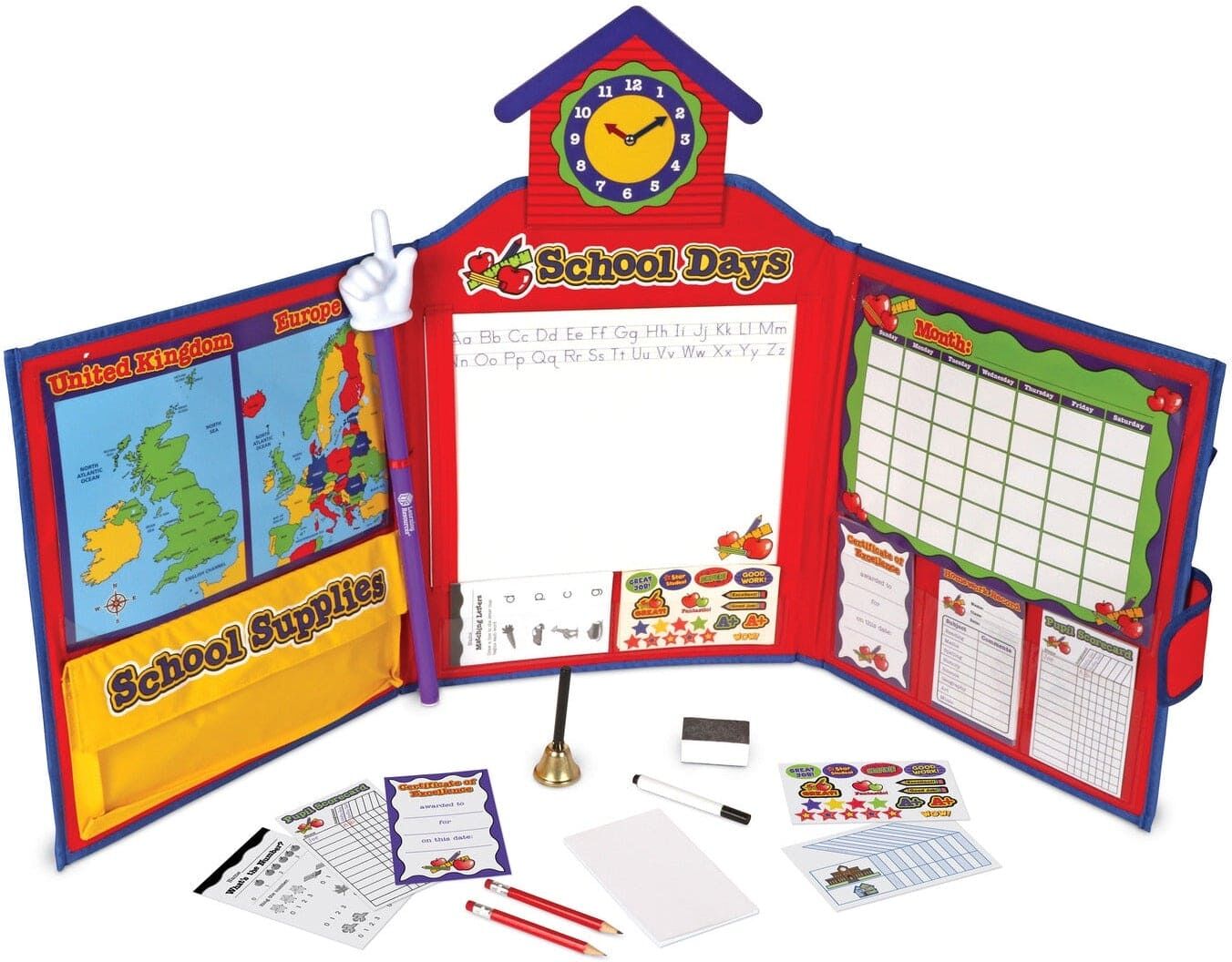
Learning Resources Pretend ; Play School Set UK Version - Pretend School Set for KidsTransform playtime into an educational adventure with the Learning Resources Pretend ; Play School Set UK Version. Includes realistic school supplies like a mini chalkboard and pretend lunch box for imaginative role-play. Designed for young learners to inspire collaboration and communication. Made from high-quality, child-safe materials for safe and endless fun.38,99 £*Shipping: 3,95 £Secure redirect to the provider



-
How can one recognize the consonantal conjugation?
The consonantal conjugation in Arabic is recognized by the presence of specific consonants at the beginning of the verb root. These consonants are typically "k", "t", or "n". Additionally, the conjugation pattern for the consonantal conjugation usually involves adding specific prefixes and suffixes to the verb root. Lastly, the vowels within the verb conjugation will follow a specific pattern that is characteristic of the consonantal conjugation. **
-
How do I recognize the mixed or consonantal conjugation?
The mixed or consonantal conjugation in Arabic is recognized by the presence of both long and short vowels in the verb conjugations. In the past tense, the mixed conjugation verbs have a combination of long and short vowels in the different conjugations, while the pure or weak verbs have only short vowels. In the present tense, the mixed conjugation verbs have a combination of long and short vowels in the different conjugations, while the pure or weak verbs have only long vowels. Additionally, the mixed conjugation verbs often have a 'ta' or 'ya' prefix in the past tense conjugations, and a 'ya' prefix in the present tense conjugations. **
-
What is the difference between consonantal and mixed declension?
Consonantal declension is a type of declension in which the stem of a noun remains unchanged throughout all cases, while the endings change. On the other hand, mixed declension is a type of declension in which the stem of a noun changes in some cases, but remains the same in others. In mixed declension, some cases follow the patterns of consonantal declension, while others follow the patterns of declension with stem changes. **
-
How can one recognize the consonantal conjugation in Latin?
The consonantal conjugation in Latin can be recognized by the characteristic endings of the present tense conjugation of verbs. In the first conjugation, verbs typically end in -o, -as, -at, -amus, -atis, -ant. In the second conjugation, verbs typically end in -eo, -es, -et, -emus, -etis, -ent. In the third conjugation, verbs typically end in -o, -is, -it, -imus, -itis, -unt. These endings are different from the vowel conjugation endings, making it possible to recognize the consonantal conjugation in Latin. **


How do I recognize the consonantal conjugation in Latin verbs?
The consonantal conjugation in Latin verbs can be recognized by the presence of a consonant stem in the present tense forms. This means that the present tense forms of the verb will have a consonant stem that remains constant throughout the conjugation, unlike the vowel conjugation where the stem may change. Additionally, the infinitive form of the verb will end in -ere, and the present tense forms will have specific endings that indicate the person and number of the subject. It is important to familiarize yourself with the patterns and endings of the consonantal conjugation to recognize and conjugate these verbs correctly. **
What is the difference between vocalic coda and consonantal coda?
A vocalic coda is the ending sound of a syllable that is a vowel or a diphthong, while a consonantal coda is the ending sound of a syllable that is a consonant. In other words, a vocalic coda ends with a vowel sound, while a consonantal coda ends with a consonant sound. For example, in the word "go," the "o" is a vocalic coda, while in the word "cat," the "t" is a consonantal coda. **
Top-Angebote
Products related to Consonantal:
-
Market Central Felt Finger Numbers Math Toy Toddler Counting Early Education Learning Game Felt Finger Numbers Math Toy Toddler Counting Early Education Learning GameThis toddler Montessori felt math toy provides an interactive way for young children to learn basic numbers and early counting skills. Designed to build foundational math skills through handson play, it helps develop early childhood intelligence and...34,97 $*Shipping: 0,00 $Secure redirect to the provider
-
Perfect Picks Market Montessori Reusable Learning Cards Set For Kids Early Education Writing Practice Game Montessori Reusable Learning Cards Set For Kids Early Education Writing Practice GameTurn everyday learning into a fun, handson experience with these Montessori toys designed to spark curiosity and creativity. This engaging set of reusable cards helps young children build essential skills through play, making it perfect for early...39,97 $*Shipping: 0,00 $Secure redirect to the provider
-
SSO Back to School Back to School: Kindergarten Learning Value PackThis set includes:Scholastic Early Learners: Get Ready for Kindergarten Jumbo WorkbookScholastic Early Learners: Kindergarten Jumbo WorkbookSmart Practice Workbook: Kindergarten Back to School: Kindergarten Learning Value Pack34,82 $*Shipping: 0,00 $Secure redirect to the provider
-
Tiny Tots Teens Trends Drawer Game Early Education Montessori Wooden Pitch Ball Box Preschool Learning Training Toy Drawer Game Early Education Montessori Wooden Pitch Ball Box Preschool Learning Training ToyThis Montessori Wooden Pitch Ball Box Drawer Game is a thoughtfully designed earlyeducation toy that transforms playtime into purposeful learning. Crafted for toddlers and preschoolers, it offers a handson, engaging way to support key developmental...39,97 $*Shipping: 0,00 $Secure redirect to the provider
-
What does the consonantal conjugation mean?
Consonantal conjugation is a grammatical feature found in Semitic languages, where the root of a verb consists of consonants only, and the vowels are added to indicate different tenses, moods, and aspects. This type of conjugation is characterized by changes in the vowels within the root consonants to convey different meanings. Consonantal conjugation allows for a high degree of flexibility and complexity in verb forms, making it a key feature of Semitic language grammar. **
-
How can one recognize consonantal adjectives?
Consonantal adjectives in Arabic are recognized by the presence of a consonant at the beginning of the word, followed by a long vowel (usually "aa" or "ee") and then a consonant. For example, the word "kabiir" (كَبِير) meaning "big" has the consonant "k" at the beginning, followed by the long vowel "aa" and then the consonant "b". This pattern is consistent for most consonantal adjectives in Arabic, making them relatively easy to recognize once you are familiar with the pattern. **
-
How can one recognize the consonantal conjugation?
The consonantal conjugation in Arabic is recognized by the presence of specific consonants at the beginning of the verb root. These consonants are typically "k", "t", or "n". Additionally, the conjugation pattern for the consonantal conjugation usually involves adding specific prefixes and suffixes to the verb root. Lastly, the vowels within the verb conjugation will follow a specific pattern that is characteristic of the consonantal conjugation. **
-
How do I recognize the mixed or consonantal conjugation?
The mixed or consonantal conjugation in Arabic is recognized by the presence of both long and short vowels in the verb conjugations. In the past tense, the mixed conjugation verbs have a combination of long and short vowels in the different conjugations, while the pure or weak verbs have only short vowels. In the present tense, the mixed conjugation verbs have a combination of long and short vowels in the different conjugations, while the pure or weak verbs have only long vowels. Additionally, the mixed conjugation verbs often have a 'ta' or 'ya' prefix in the past tense conjugations, and a 'ya' prefix in the present tense conjugations. **
Similar search terms for Consonantal
-
SSO Back to School Back to School: Pre-K Learning Value PackThis set includes:Scholastic Early Learners: Get Ready for Pre-K Jumbo WorkbookScholastic Early Learners: Giant Phonics WorkbookScholastic Early Learners: Pre-K Jumbo Workbook Back to School: Pre-K Learning Value Pack30,57 $*Shipping: 0,00 $Secure redirect to the provider
-
Learning Resources Pretend ; Play School Set UK Version - Pretend School Set for KidsTransform playtime into an educational adventure with the Learning Resources Pretend ; Play School Set UK Version. Includes realistic school supplies like a mini chalkboard and pretend lunch box for imaginative role-play. Designed for young learners to inspire collaboration and communication. Made from high-quality, child-safe materials for safe and endless fun.38,99 £*Shipping: 3,95 £Secure redirect to the provider
-
Arrow James Patterson Private Series 1-8 Books Collection Set (Private, Private London, Private Games, Private: No. 1 Suspect, Private Berlin and MORE)James Patterson Private Series 1-8 Books Collection Set Private Former US Marine Jack Morgan runs Private, a renowned investigation company with branches around the globe. It is where you go when you need maximum force and maximum discretion. Private London For Hannah Shapiro, a beautiful young American student, this particular nightmare began eight years ago in Los Angeles, when Jack Morgan, owner of Private. Private Games The Games have arrived in London and the stage is set for one of the greatest ever showcases of sporting excellence. Private: No. 1 Suspect Since former US Marine Jack Morgan started Private, it has become the world s most successful detective agency. But when his former lover is found murdered in Jack s bed, Jack is instantly the number one suspect. Private Berlin Mattie Engel is one of the rising stars at Private Berlin, and believes she's seen the worst of people in her previous life with the Berlin police force. Private Down Under P.I. Craig Gisto, head of the latest branch of Private, is enjoying the glamorous launch party with his new team when their celebrations are interrupted by the bloodied arrival of a boy with his eyes gouged out. Private L. A. Jack Morgan is having a bad week. His twin brother is up on a murder charge and determined to frame him for the crime, and one of Jack s clients has just called to report the burnt bodies of four surfers on his beach. Private India When Santosh Wagh isn t struggling out of a bottle of whisky he s head of Private India, the Mumbai branch of the world s finest PI agency.18,99 £*Shipping: 2,99 £Secure redirect to the provider
-
Perfect Picks Market Kids Emotional Expression Mirror Early Education & Emotional Learning Toy For Toddlers pinkNurture your childs emotional intelligence with the Kids Emotional Expression Mirrora fun, interactive learning tool designed to help toddlers understand and manage their feelings. This innovative toy features six emotional expression cards and a...49,97 $*Shipping: 0,00 $Secure redirect to the provider
-
What is the difference between consonantal and mixed declension?
Consonantal declension is a type of declension in which the stem of a noun remains unchanged throughout all cases, while the endings change. On the other hand, mixed declension is a type of declension in which the stem of a noun changes in some cases, but remains the same in others. In mixed declension, some cases follow the patterns of consonantal declension, while others follow the patterns of declension with stem changes. **
-
How can one recognize the consonantal conjugation in Latin?
The consonantal conjugation in Latin can be recognized by the characteristic endings of the present tense conjugation of verbs. In the first conjugation, verbs typically end in -o, -as, -at, -amus, -atis, -ant. In the second conjugation, verbs typically end in -eo, -es, -et, -emus, -etis, -ent. In the third conjugation, verbs typically end in -o, -is, -it, -imus, -itis, -unt. These endings are different from the vowel conjugation endings, making it possible to recognize the consonantal conjugation in Latin. **
-
How do I recognize the consonantal conjugation in Latin verbs?
The consonantal conjugation in Latin verbs can be recognized by the presence of a consonant stem in the present tense forms. This means that the present tense forms of the verb will have a consonant stem that remains constant throughout the conjugation, unlike the vowel conjugation where the stem may change. Additionally, the infinitive form of the verb will end in -ere, and the present tense forms will have specific endings that indicate the person and number of the subject. It is important to familiarize yourself with the patterns and endings of the consonantal conjugation to recognize and conjugate these verbs correctly. **
-
What is the difference between vocalic coda and consonantal coda?
A vocalic coda is the ending sound of a syllable that is a vowel or a diphthong, while a consonantal coda is the ending sound of a syllable that is a consonant. In other words, a vocalic coda ends with a vowel sound, while a consonantal coda ends with a consonant sound. For example, in the word "go," the "o" is a vocalic coda, while in the word "cat," the "t" is a consonantal coda. **
* All prices are inclusive of VAT and, if applicable, plus shipping costs. The offer information is based on the details provided by the respective shop and is updated through automated processes. Real-time updates do not occur, so deviations can occur in individual cases. ** Note: Parts of this content were created by AI.